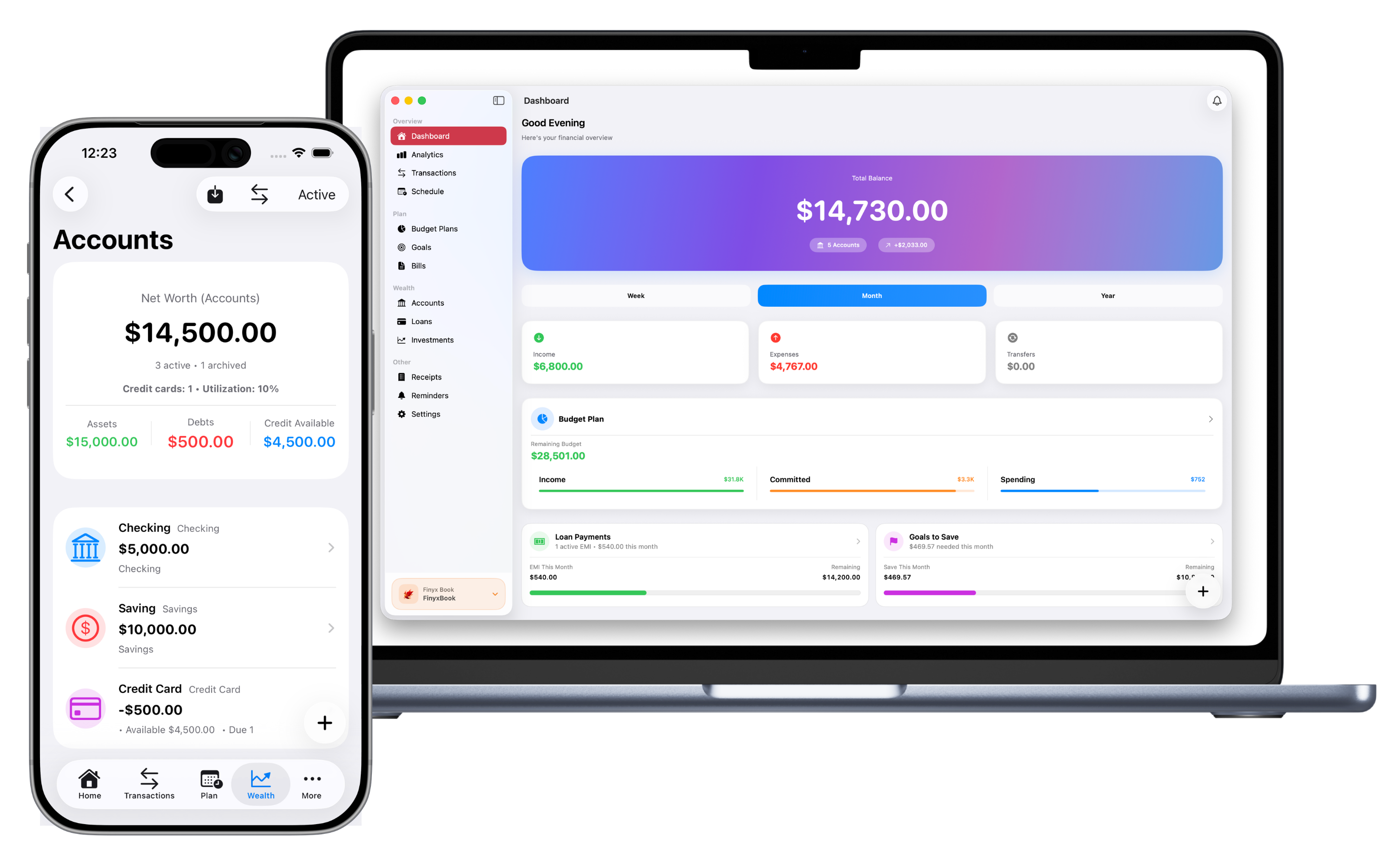
People often think money problems exist because they have not made the right budget. But many budgeting failures come from expecting one tool to do every job. A budget cannot remind you about bills, organize debt, track goals, surface subscriptions, and make irregular expenses disappear. It is one piece, not the whole structure.
1. Why a Budget Alone Is Not Enough
A budget tells you what you hope to do with your money. It does not automatically tell you what has already happened, what is due soon, what long-term goals need attention, or what hidden recurring costs are distorting the month.
2. The Missing Pieces People Usually Ignore
Most people also need expense tracking, bill visibility, savings goals, irregular expense planning, and debt or investment tracking. Without those, the budget becomes too abstract to guide daily decisions well.
Budgets fail less often when they are connected to the rest of a financial system instead of expected to carry everything alone.
3. What a Real Money System Looks Like
A real system includes daily transaction awareness, weekly review, monthly planning, savings targets, recurring expense visibility, and a way to separate different parts of your financial life when needed.
4. Why Systems Are Easier to Follow
Systems reduce the number of decisions you have to recreate. Instead of asking yourself from scratch what matters this month, the structure keeps the answer visible.
When bills, budgets, goals, and recent spending are visible together, it becomes easier to decide whether a purchase fits reality without doing mental accounting.
5. How to Build One Gradually
Do not try to perfect everything at once. Start with tracking and a simple budget, then add bill visibility, then one or two goals, then debt or investment tracking if relevant. A good system expands without becoming heavy.
6. What to Do in FinyxFin
- Keep budgets, expenses, bills, goals, loans, and investments in one place.
- Reduce fragmentation so you do not have to rebuild your financial picture from multiple apps and notes.
- Use books to separate different financial contexts without losing overall structure.
- Review your money system as a whole instead of treating each part in isolation.
Final Thoughts
A budget still matters. It just works far better when it lives inside a wider system that supports actual decision-making and follow-through.
When money tools stop being scattered, financial control starts feeling less theoretical and more usable.