A lot of people want the benefits of expense tracking without giving a third-party app access to their bank accounts. That is a reasonable preference, not a limitation. Manual expense tracking can still be simple, effective, and far more private than fully automated systems.
1. Why Some People Avoid Bank-Linked Finance Apps
Bank-linked apps promise convenience, but they are not the right fit for everyone. Some people do not like sharing banking access with multiple services. Others find automated feeds noisy, confusing, or hard to trust when categories are misread and transfers are duplicated.
There is also a psychological issue: automation can make people passive. You may technically have the data, but still feel disconnected from your spending because you did not actively record or review it.
Convenience is useful, but awareness matters more. A simple manual system often creates stronger spending awareness because it requires a small moment of attention every time money moves.
2. What a Simple Manual Tracking System Looks Like
A good manual tracking system should be light enough to maintain. The goal is not to record every possible detail. The goal is to capture enough information to understand where your money is going.
At minimum, each expense should answer four questions: when did it happen, how much was it, what was it for, and what category does it belong to? That is enough to spot patterns, review spending, and make adjustments without turning finance into paperwork.
If you buy groceries for $74, you do not need a spreadsheet-level breakdown of each item. “Groceries · $74 · Saturday” is enough for most budgeting and review purposes.
3. What to Track Daily, Weekly, and Monthly
Manual systems work best when the workload is distributed. Daily tracking should be quick. Weekly review should be reflective. Monthly review should be strategic.
- Daily: log spending, income, and transfers as they happen.
- Weekly: review categories, spot unusual patterns, and correct mistakes.
- Monthly: compare spending with budgets, review goals, and decide what needs to change next month.
4. Common Mistakes People Make
The biggest mistake is making the system too detailed too early. People start with perfect intentions, build a complex structure, and then stop using it because maintaining it takes too much effort.
Another common mistake is waiting too long to record transactions. If you only update finances every few weeks, details blur and the task begins to feel heavy.
Keep the system simple enough that you can use it on an ordinary day, not just on your most organized day.
5. How to Make the Habit Stick
Expense tracking becomes easier when it is attached to an existing routine. Logging a transaction right after paying, reviewing finances every Sunday evening, or checking progress when you make a coffee can all reduce the need for extra willpower.
The habit also gets easier when the system gives something back quickly. The faster you can see progress, patterns, or clarity, the more likely you are to keep using it.
6. Why Privacy Matters More Than People Think
Money data is deeply personal. It can reveal your routines, priorities, stress points, and lifestyle in ways many people underestimate. Choosing a more private system is not paranoia. It is simply deciding to keep sensitive information on a shorter chain.
For many people, manual-first finance tools feel calmer because they know exactly what data exists, where it lives, and how it got there.
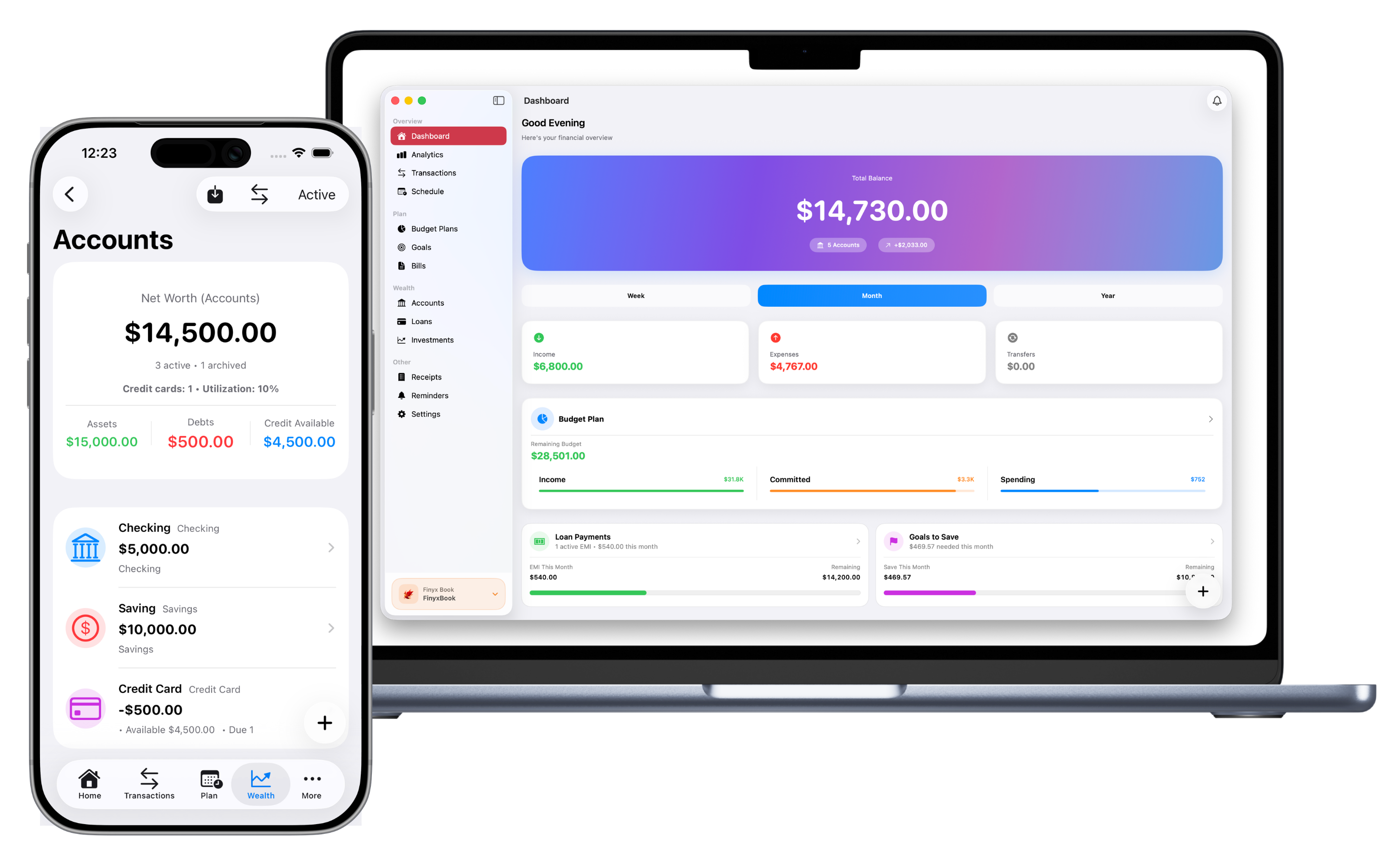
7. What to Do in FinyxFin
Manual finance tracking works best when entry is fast, structure is clear, and review is easy. The system should support the habit rather than getting in the way of it.
- Add expenses, income, and transfers quickly without connecting a bank account.
- Use categories to keep spending organized without making the system too detailed.
- Scan receipts when you want to reduce manual typing while still staying in control of the data.
- Review transactions, budgets, bills, goals, and other parts of your finances from one place.
Final Thoughts
You do not need bank connections to be good at tracking money. What you need is a system that is simple enough to maintain, structured enough to be useful, and private enough that you feel comfortable using it long term.
Manual tracking is not old-fashioned. When done well, it is focused, intentional, and often far clearer than people expect.