A lot of budgets fail for one simple reason: they ask people to maintain a level of detail they do not have the time or attention to support. A budget should help you make decisions more quickly, not create a second job. The simpler it is, the more likely it is to survive real life.
1. Why Many Budgets Fail
People often assume budgeting fails because they lack discipline. More often, the real problem is complexity. The budget has too many categories, too many rules, or too many moving pieces to keep up with consistently.
When the system becomes hard to maintain, it stops being used. And once the system is ignored, even a beautifully designed budget loses its value.
A budget should support decision-making. If it takes too much effort to update or understand, it becomes friction instead of help.
2. What a Simple Budget Actually Needs
A useful budget does not need to account for every possible spending nuance. It needs enough structure to separate essentials, flexible spending, and future priorities. That is usually enough to understand where money is going and what needs attention.
The best budget is not the most detailed one. It is the one you can still follow on an average week, in a busy month, or during a stressful season.
3. A Three-Part Budget Structure
For many people, a three-part structure is enough: essentials, flexible spending, and savings or goals. That creates clarity without overwhelming detail.
- Essentials: rent, utilities, groceries, transportation, insurance.
- Flexible spending: dining out, shopping, entertainment, lifestyle spending.
- Savings and goals: emergency fund, sinking funds, debt payoff, travel, or other priorities.
If you need more detail later, you can add it. But simplicity is what makes the system resilient at the start.
4. How Often to Review It
Budgets do not need constant attention, but they do need regular contact. A quick weekly check-in is often enough to prevent drift, while a monthly review helps you reset before the next cycle begins.
The weekly review is about awareness. The monthly review is about adjustment. Together, they keep the budget alive without making it feel heavy.
5. Common Budgeting Mistakes
One common mistake is creating too many categories on day one. Another is treating the budget like a scorecard instead of a decision tool. A third is forgetting to plan for irregular expenses, which makes the monthly plan look better on paper than it feels in reality.
Your budget should be honest enough to reflect real life, not idealized enough to impress you for three days and then collapse.
6. When to Adjust Your Budget
A budget is not a fixed identity. It is a working plan. If your income changes, your priorities shift, or a category is consistently unrealistic, change it. The goal is usefulness, not purity.
Adjustments are not a sign that the budget failed. They are a sign that you are paying attention.
If your food budget is consistently too low because it ignores your actual routine, increasing it may be more useful than pretending next month will be magically different.
7. What to Do in FinyxFin
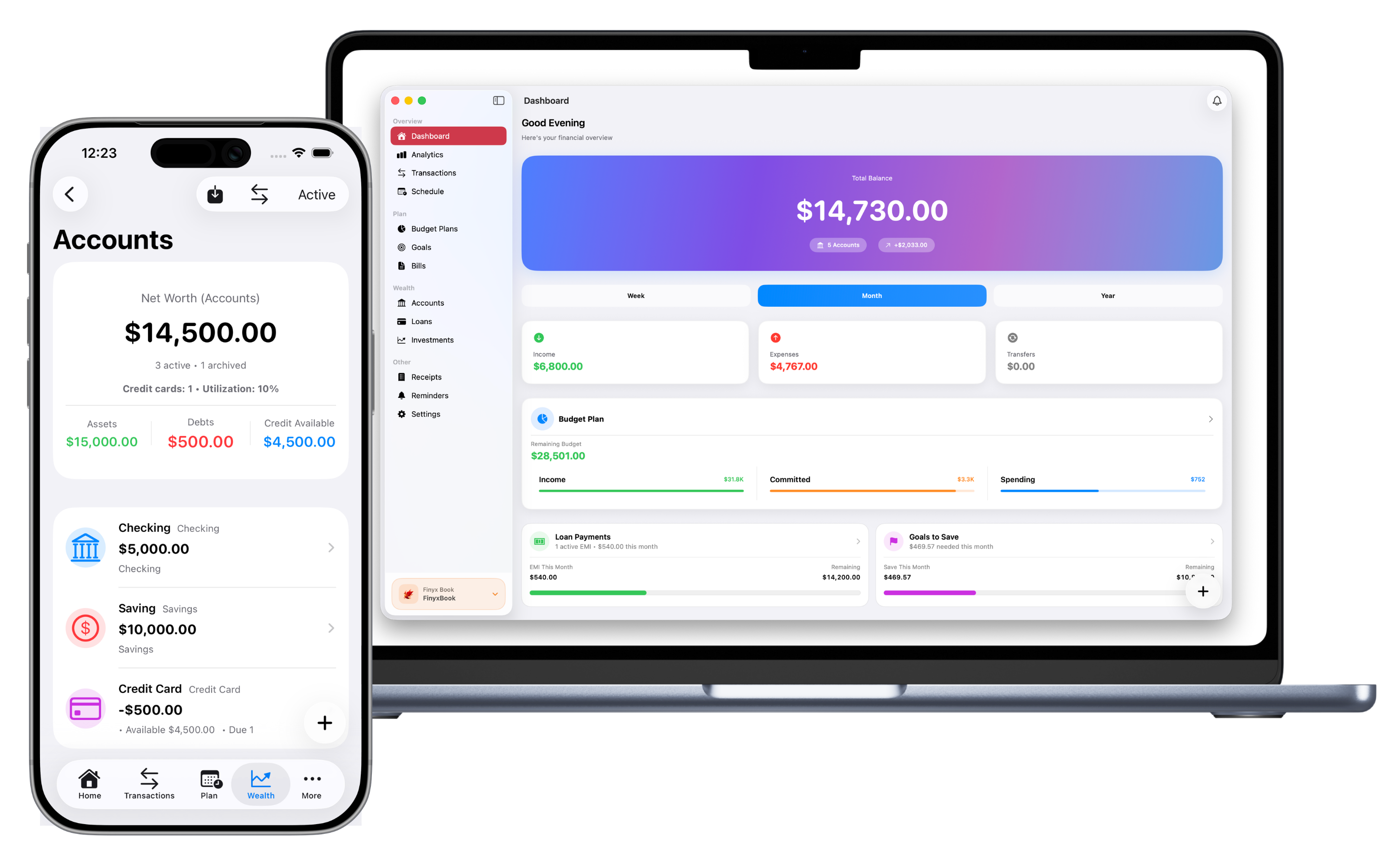
Budgeting gets easier when the system stays visible and easy to update. The point is not to maintain a perfect spreadsheet. The point is to know what is left, what is off track, and what needs to change.
- Create simple budgets you can realistically maintain instead of building an overly detailed structure.
- Track how much is left in a category during the month instead of guessing.
- Review transactions and budgets together so spending patterns make sense quickly.
- Connect budgets to goals, bills, and other parts of your system so financial decisions feel joined up rather than isolated.
Final Thoughts
A simple budget is not a lesser budget. In many cases, it is the stronger one because it is easier to maintain, easier to understand, and more likely to survive real life.
If your current system feels heavy, the solution may not be more effort. It may be less complexity.