If debt payoff feels confusing, it usually is not because the formulas are hard. It is because the emotional side of debt is often ignored. Two people with the same numbers may need very different payoff strategies to stay consistent.
1. What the Debt Snowball and Debt Avalanche Actually Are
The debt snowball pays debts from smallest balance to largest balance, regardless of interest rate. The debt avalanche pays debts from highest interest rate to lowest rate, regardless of balance size.
Both methods ask you to keep making minimum payments on all debts and direct extra money toward one target at a time. The structure is similar. The order is what changes.
If one card has a tiny balance but a lower interest rate, the snowball targets it first for a quick win. The avalanche may ignore it for longer if another debt is costing you more interest.
2. Math vs. Behavior: Why This Choice Matters
On paper, the avalanche usually saves more money because it reduces the most expensive debt first. But debt payoff does not happen on paper. It happens inside real lives, with interruptions, fatigue, and months where motivation is low.
If quick visible progress keeps you engaged, the snowball may outperform a mathematically better strategy you abandon after two months.
3. When the Debt Snowball Works Well
The snowball works well when you feel overwhelmed by having too many balances, need faster emotional wins, or want to reduce the number of monthly payments quickly.
It is especially useful when debt has become more than a math problem. If your debt is causing shame, avoidance, or decision fatigue, momentum may matter more than optimization.
4. When the Debt Avalanche Works Well
The avalanche works well when you are already highly consistent, motivated by efficiency, and willing to wait longer for obvious milestones. It fits people who want the most interest savings and who trust the plan even when early wins are slower.
If you already review your numbers regularly and enjoy seeing the long-term payoff of better math, the avalanche may feel easier to commit to.
5. How to Choose Without Overthinking It
Pick the method that removes friction, not the one that makes you feel guilty for being human. If you keep switching methods, you are usually protecting yourself from discomfort rather than making progress.
Choose one method, commit for three to six months, and judge it by consistency and stress reduction, not by abstract perfection.
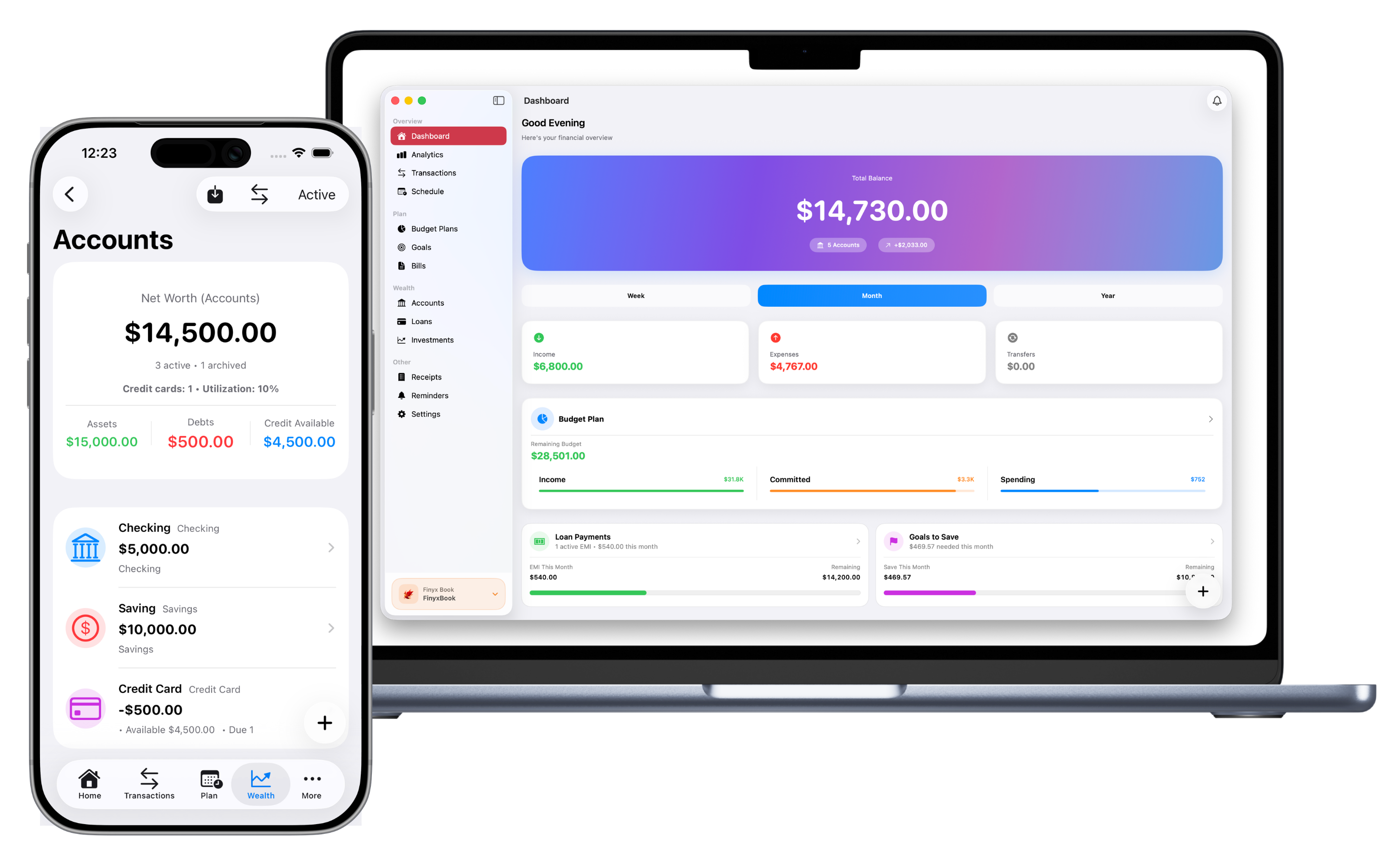
6. What to Do in FinyxFin
Debt payoff gets easier when the plan stays visible. You should not have to rebuild the strategy in your head every time you get paid.
- Add each loan or debt separately so balances are clear.
- Track repayments over time instead of seeing debt as a single vague burden.
- Create a goal for your next payoff milestone to make progress feel concrete.
- Review debt next to budgets and spending so trade-offs are visible in one place.
Final Thoughts
Debt payoff works best when the method fits your behavior, not just your spreadsheet. A good plan reduces confusion, keeps you engaged, and makes the next step obvious.
Whether you choose snowball or avalanche, the real win is building a system you can trust long enough to reach the other side.